13 Oct 2026
When Good Revenue Still Leaves You Short
A freelance designer lands a $6,000 project, and the payment arrives on a Tuesday. By Friday, rent is paid, software subscriptions have renewed, and a long-delayed equipment purchase is done. Then an estimated tax deadline shows up on the calendar, and the money that should have covered it is gone.
That is the core problem behind self-employed quarterly taxes: revenue is not the same as spendable income. No employer withholds tax from your client payments, so setting money aside falls to you. Tax planning works better when it is built into cash-flow management rather than treated as a last-minute bill.
This guide explains how estimated payments work, how to build a tax reserve that fits your situation, and what to do when cash is tight. The central habit is simple: separate tax money from operating and personal funds before you spend anything.
Why Self-Employed Workers Struggle With Quarterly Taxes
Employees see taxes removed before a paycheck arrives. Self-employed workers see the full payment, which makes it feel larger than it is. Several patterns cause trouble:
• No employer withholding federal income tax or payroll taxes on your behalf.
• Income that swings from month to month.
• Business revenue mixed with personal spending.
• Business profit that creates a tax obligation even after the cash has been spent.
• Underestimating self-employment tax alongside income tax.
• Surprise costs, late-paying clients, or seasonal slowdowns.
Depending on your circumstances, you may owe federal income tax, self-employment tax, and state or local income taxes. Obligations vary by person, so a colleague’s tax picture rarely matches yours.
How Self-Employed Quarterly Taxes Actually Work
Estimated tax is how you pay tax on income that has no withholding. Generally, the IRS expects estimated payments if you expect to owe at least $1,000 after withholding and refundable credits, and your withholding will fall below certain safe-harbor thresholds. Special rules apply to farmers, fishers, and some other taxpayers, so quarterly tax payments for self-employed workers are not one-size-fits-all.
Two taxes are involved. Income tax applies to your taxable income. Self-employment tax covers Social Security and Medicare, carries a 15.3% rate, and is figured on Schedule SE. It is one piece of your tax bill, not the whole bill.
Because estimated payments are based on expected liability rather than a flat share of revenue, the starting point is Form 1040-ES and its worksheets. Withholding from another job, or from a spouse’s wages, may reduce what you need to pay, depending on your household. You also do not necessarily make four identical payments: the IRS says you can pay in quarterly installments or, generally, pay the full amount by the first due date. Penalties and exceptions turn on your facts.
How Much Should You Save for Quarterly Taxes?
There is no percentage that works for everyone. The right reserve depends on your income, deductions, filing status, other income, and the federal and state rules that apply to you. A practical method:
1. Estimate annual net profit, not gross revenue alone.
2. Estimate federal income tax and self-employment tax using current IRS guidance and the 1040-ES worksheet.
3. Account for deductions, credits, withholding, and other income.
4. Consider any state or local tax obligations.
5. Divide the estimate into a savings plan, then revisit it whenever income changes.
Many freelancers use a provisional reserve percentage as a budgeting shortcut. Treat it as a starting estimate, not a tax rate and not personalized tax advice.
Illustrative example (not a tax calculation): A consultant receives a $4,000 client payment and chooses a provisional 25% reserve. She moves $1,000 into a tax account and treats the remaining $3,000 as available for business costs and personal pay. That $1,000 is cash being held, not her tax bill. Her actual liability depends on her real profit, deductions, and other facts, so the reserve may end up too high or too low.
That distinction matters: reserving cash keeps money from being spent, while the worksheet calculates what you actually owe.
A Cash-Flow System That Makes Quarterly Taxes Easier
These seven steps turn quarterly taxes cash flow management into a routine instead of a scramble.
Step 1: Separate business and personal money. Use dedicated accounts, or at least clearly tracked balances, so you can see what the business actually holds.
Step 2: Create a tax reserve. When a payment arrives, move your estimated share into a dedicated savings account before it mixes with spending money.
Step 3: Budget from profit, not gross receipts. Cover operating costs before treating money as personal income, and remember that deductible expenses and cash expenses are not always identical.
Step 4: Forecast uneven income. Use conservative estimates, list upcoming bills, and flag months when cash may run thin.
Step 5: Review monthly. Compare income, expenses, estimated liability, and the amount already reserved.
Step 6: Recalculate when circumstances change. A new client, a major expense, an income drop, or an unexpectedly strong quarter can all change your estimate.
Step 7: Schedule payments intentionally. Keep due dates visible and pay early enough to confirm the amount and the payment status.
The goal is not to eliminate financial uncertainty. It is to make a large tax bill unlikely to become an emergency.
When Are Quarterly Estimated Taxes Due?
For tax year 2026, the IRS schedule for calendar-year individuals is:
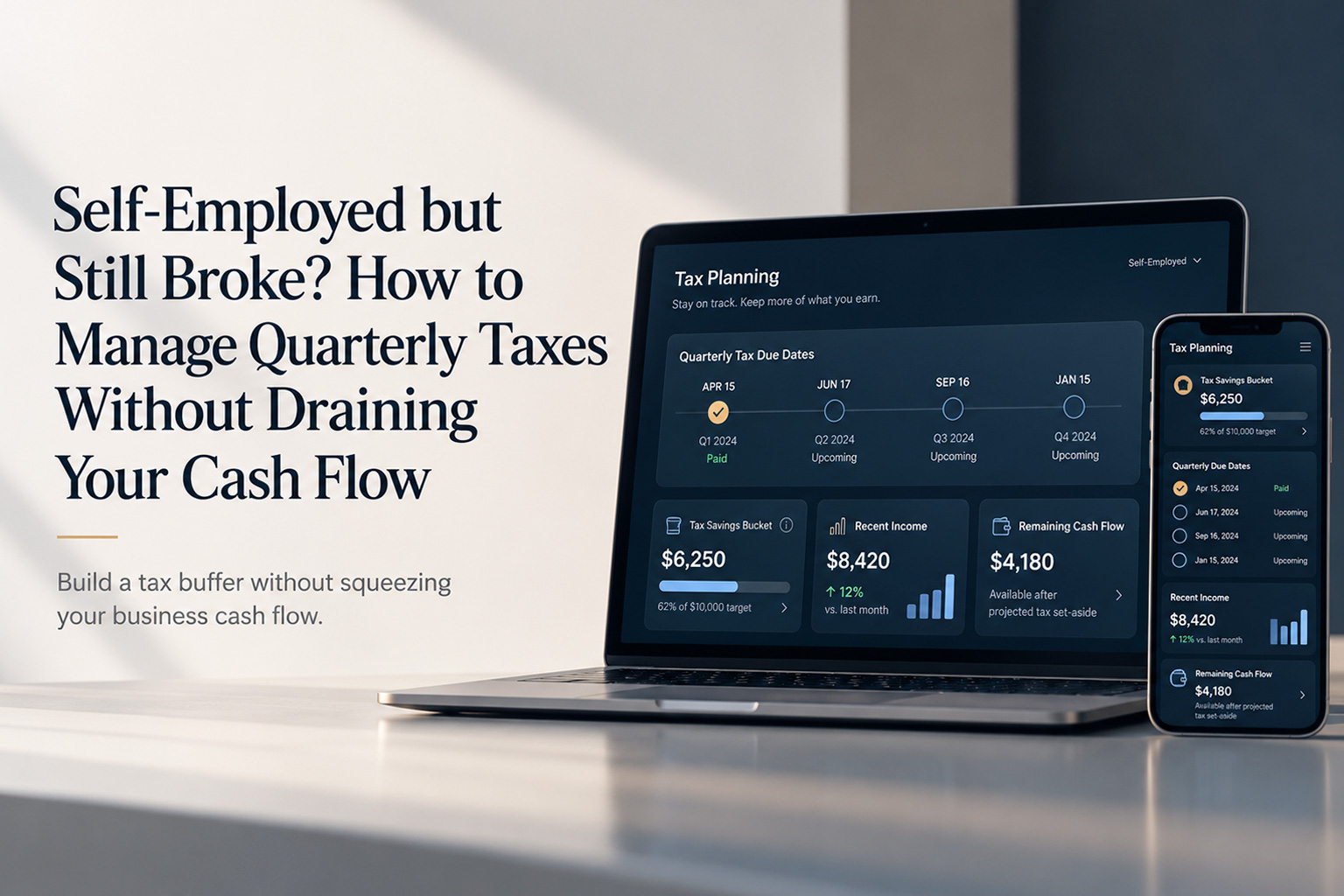
• January 1–March 31 income: April 15, 2026
• April 1–May 31 income: June 15, 2026
• June 1–August 31 income: September 15, 2026
• September 1–December 31 income: January 15, 2027
The periods are unequal, so installments are not evenly spaced three-month intervals. If a date falls on a weekend or legal holiday, a payment made the next business day is on time. Disaster relief and other special IRS extensions can also change dates for some taxpayers. As of this writing in October 2026, the next federal deadline is January 15, 2027. These are payment dates, not return filing deadlines, and the amount due can differ for each taxpayer.
What If You Cannot Afford Your Quarterly Tax Payment?
Falling short happens, and acting early gives you more options. Sensible next steps:
• Recalculate your liability using current income and expense data.
• Confirm that prior payments, withholding, and credits have been counted.
• Review cash flow to find money you can realistically allocate.
• Talk with a qualified tax professional about options for your situation.
• Read current IRS guidance on payment options, installment agreements, and penalties and interest.
Paying less than required can trigger an underpayment penalty in some circumstances, even if you later pay the balance or expect a refund when you file. Exceptions depend on the facts. The IRS offers payment plans, but approval is not guaranteed, and a plan does not automatically erase penalties or interest. Do not ignore IRS notices; respond to them promptly.
Can Business Expenses Reduce Your Tax Bill?
Ordinary and necessary business expenses may reduce your taxable profit when they are properly documented and treated correctly under tax rules. Software, supplies, professional services, and eligible business-use costs are common examples, as the IRS explains in Publication 334. Keep in mind:
• Not every purchase is deductible.
• Personal expenses generally cannot be claimed simply because you are self-employed.
• Some costs must be depreciated or split between business and personal use.
• A deduction reduces taxable income; it does not reimburse the full amount you spent.
• Spending money mainly to obtain a deduction is not automatically a good financial decision.
Keep receipts and clear records, and ask a professional about expenses with complex eligibility rules.
How Tax Planning and Bookkeeping Support Better Cash Flow
Reliable bookkeeping connects every step above. Current records show what you earned, what you spent, and how much cash is truly available, which makes profit estimates and reserve amounts more realistic. Organized books also make estimated payments easier to prepare and deductions easier to support.
Bookkeeping supports tax planning, but it does not replace a proper tax calculation. Your final liability still depends on tax rules, deductions, credits, and your full financial picture.
TaxProNext provides tax, accounting, and bookkeeping services for readers who need help organizing records and preparing for tax obligations. If your records are scattered or your estimates feel like guesses, that is a good moment to bring in support.
Frequently Asked Questions
How do self-employed workers pay quarterly taxes?
Estimate your annual income, deductions, and credits using Form 1040-ES and its worksheets, then pay by each due date. The IRS accepts electronic options, including IRS Direct Pay from a bank account, your IRS online account, and the IRS app. Mailing a voucher is also possible. Check the IRS payments page for current methods.
How much should I save for quarterly taxes?
It depends on your estimated tax liability, which reflects net profit, deductions, other income, withholding, filing status, and state obligations. No single percentage fits everyone. A provisional reserve can help you budget, but use the worksheet to calculate expected liability and adjust as your income changes.
When are quarterly estimated taxes due?
For tax year 2026, calendar-year individuals generally pay by April 15, June 15, September 15, and January 15, 2027. Weekends, holidays, and special IRS relief can shift dates, and farmers and fishers follow different rules. Confirm dates on the official IRS estimated tax page.
How can I pay quarterly taxes without hurting cash flow?
Move a share of each client payment into a separate reserve, forecast upcoming expenses, and review your numbers monthly. Recalculate when income changes so you are not relying on an outdated estimate. Budgeting from profit rather than gross receipts keeps tax money from being spent elsewhere.
What happens if I can’t afford my quarterly tax payment?
You may owe an underpayment penalty, depending on your circumstances and any exceptions. Review your liability promptly, recalculate if income has changed, and consult a tax professional. The IRS publishes payment options, including installment agreements, but approval is not guaranteed and penalties and interest may still apply.
Can self-employed workers deduct business expenses to reduce taxes?
Yes. Eligible ordinary and necessary business expenses may reduce taxable profit, subject to applicable rules and proper documentation. Personal expenses generally do not qualify, and some costs must be allocated or depreciated. A deduction lowers taxable income rather than reimbursing the full purchase.
Make Tax Payments Part of Your Cash-Flow Plan
Self-employed quarterly taxes are easier to manage when money is reserved as income arrives, bookkeeping stays current, and estimates are reviewed regularly. Uneven months will still happen, but a repeatable system keeps a tax payment from feeling like a surprise. This article is general education, not personalized tax advice.
Partner with TaxProNext for tax and bookkeeping support that helps you stay organized, understand your obligations, and plan your business finances with greater confidence.