

15 Apr 2026
Surprising facts! The term "no tax on tips" is becoming increasingly popular both in workplaces and online platforms; however, many people do not have an adequate understanding of its real meaning. While employees believe that their earnings from tips are completely free of taxes in 2026, employers consider the possibility of their new duties regarding taxes. In reality, there lies some truth in both cases because tip income remains taxable despite recent changes.
The no tax on tips 2026 USA concept is not a tax-free policy for Americans, but rather the latest IRS updates concerning the issue under consideration. For both parties involved, knowing these updates is crucial.
What “No Tax on Tips” Really Means in 2026
The idea of no tax on tips is often misunderstood. For most people, tips are taxable income according to federal tax laws. Nevertheless, some suggestions and revisions are geared toward lowering the actual tax liability using deductions or more robust reporting requirements.
As opposed to abolishing taxes, the IRS's no tax on tips regulations are designed for:
- Clarifying what counts as taxable tip income
- Improving transparency in reporting
- Allowing limited deductions in qualifying cases
- Strengthening compliance for employers and gig platforms
Therefore, when individuals inquire about whether no tax on tips is tax-free, the correct response is no, because tips are taxable, but the taxing process is becoming more standardized.
Are Tips Still Taxable in 2026?
Yes, there will still be taxation of tips in the United States in 2026, irrespective of payment type and occupation. Whether earned in cash, through credit card transactions, or via apps, tip income must be reported.
Tips commonly include:
- Cash tips received directly from customers
- Card-based tips processed through employers
- Shared or pooled tips in restaurants
- App-based tips from Uber, DoorDash, and freelance platforms
The IRS continues to classify tips as income subject to federal tax, Social Security, and Medicare contributions. Failure to report can lead to penalties under IRS tip reporting rules.
How Tips Are Taxed in the USA (2026 Update)
The structure of how tips are taxed in the USA in 2026 remains consistent with prior years, but enforcement is stronger due to digital payment tracking.
In general, tip income is subject to:
- Federal income tax
- Payroll taxes (FICA)
- State income tax (depending on location)
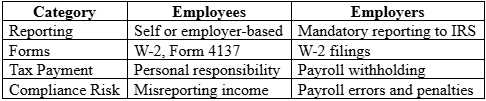
Employees are expected to report tips regularly to employers, while employers must include them in payroll records and file them through Form W-2 tip reporting systems. Gig workers and freelancers may need to use Form 4137 tip income reporting if tips are not properly reported through platforms.
Who Actually Benefits From “No Tax on Tips” Rules?
Not every worker benefits equally from the evolving system. The concept of who qualifies for no tax on tips depends on income level, job type, and compliance behavior.
In many cases, potential benefits apply to:
- Low-to-moderate income tipped employees
- Gig workers with documented business expenses
- Workers who fully comply with reporting requirements
- Service industry employees in structured payroll systems
However, higher earners or non-compliant workers typically do not receive meaningful tax relief. The system is designed more as a compliance adjustment than a universal exemption.
How the Tip Tax Deduction Actually Works
Instead of a full exemption, many updates revolve around a tip income tax deduction in the USA model. This means eligible workers may reduce taxable income rather than eliminate it.
The key difference between tip deduction and tax exemption is important:
- A deduction reduces taxable income
- An exemption removes income from taxation entirely
According to the existing interpretation, most of the tax benefits can be classified as deductions related to expenditures or earnings thresholds, not complete removal from taxation.
When asked how to write off tips on taxes, one needs to provide information about his/her income and relevant expenditures (uniforms, tools, mileage, service expenses).
Employer Responsibilities and Payroll Compliance
For employers, especially in hospitality and service industries, employer reporting tips IRS 2026 requirements are becoming stricter and more closely monitored.
Businesses must:
- Collect employee-reported tips accurately
- Include tips in payroll calculations
- Report tip income on W-2 forms
- Ensure proper withholding for payroll taxes
- Follow restaurant payroll tax rules in the USA
Non-compliance will lead to audits, fines, and even disputes concerning the tax amount that should have been paid but was not. These factors explain why numerous businesses prefer seeking payroll compliance services for restaurants and payroll tax reporting services for employers.
Payroll Challenges for Restaurants and Small Businesses
The management of tipped staff is one of the most complicated areas of payroll operations for small businesses. In this case, the problem does not only relate to calculations, but also to accuracy in reporting and legality.
A company should take into account its wages together with tip income, making sure it meets all the standards required by federal and state legislation.
Because of this complexity, many businesses use payroll services for restaurants in the USA or broader small business tax compliance services to reduce risk and administrative burden.
Gig Workers and Tip Income Tax Rules
The rise of app-based work has made gig worker tax deductions 2026 a major topic. Workers for Uber, DoorDash, and freelance platforms must treat tips as part of self-employment income.
For example:
- Uber driver tax tips in the USA often include mileage and vehicle maintenance deductions
- DoorDash driver tax tips involve fuel and delivery-related expenses
- Freelancers must account for service-related operational costs
Unlike traditional employees, gig workers are responsible for both reporting and paying taxes on their earnings, including tips.
Common Mistakes Workers Make With Tip Taxes
Many compliance issues come from misunderstanding basic rules. Workers often assume cash tips are invisible to the IRS, but modern reporting systems make that assumption risky.
Frequent mistakes include:
- Not reporting cash tips
- Ignoring app-based tip income
- Mixing personal and business expenses
- Underreporting shared tips
These errors can lead to penalties under IRS penalties for misreporting tips, especially when discrepancies are found during audits.
Step-by-Step Overview: IRS Tip Deduction Rules
Understanding IRS tip deduction rules step by step helps workers stay compliant:
First, all tips must be recorded daily or weekly. Then, monthly reporting should be submitted to employers where applicable. It is essential that all tips, both declared and undeclared, be added to the total income when tax returns are filed at year-end. Lastly, deductions need to be claimed where applicable, depending on expenses incurred.
Following this method will help ensure that everything is in order and avoid audits.
Employer vs Employee Responsibilities
Why These Rules Matter More in 2026
The new IRS tips guidelines for 2026 show a move towards digitization. The reason is that many transactions now take place electronically.
This means:
- Less underreporting risk for the IRS
- Higher compliance expectations for employers
- Greater documentation requirements for workers
Understanding tax changes for tipped workers in the USA is no longer optional; it is essential for financial stability.
Final Thoughts: What Workers and Employers Should Expect
The concept of learning about the absence of taxes on tips in 2026 is more related to tax compliance than tax evasion or abolition. Tips are still considered taxable income, but changing deductions, clearer reporting practices, and payroll compliance make managing them difficult.
It is critical for employees to be well-organized and precise with their reports, while companies need to be entirely compliant with the demands of the IRS with respect to payroll compliance.
Stay Compliant With TaxProNext
Managing tip taxation, payroll reporting, and compliance rules can be overwhelming, especially for restaurants, gig platforms, and small businesses handling variable income structures.
TaxProNext helps simplify everything with:
- Expert tax services for tipped workers in the USA
- Reliable restaurant payroll compliance services
- Full employer payroll tax reporting services
- Advanced small business tax compliance services
- Support for gig worker tax deductions 2026
Stay compliant, reduce payroll stress, and manage tip reporting confidently with TaxProNext, your partner for modern tax and payroll solutions.