
08 Sep 2026
If you run a small business, you've probably spent more time on hold with the IRS than you'd like to admit. You call about a notice, get transferred twice, and end up mailing in a form anyway. The IRS knows this is a problem too, which is part of why it built the Business Tax Account, or BTA, a free online portal that's slowly turning into the main hub for how businesses deal with their federal tax accounts.
At TaxProNext, we've been helping small business owners set up and actually use their Business Tax Account since it first rolled out, and we've watched it grow from a fairly limited tool into something that can genuinely save an owner hours a month. This guide walks through what it is, who can use it right now, what changed this past summer, and where people tend to get stuck, plus how our team can help if you'd rather not figure it out alone.
So, What Is an IRS Business Tax Account?
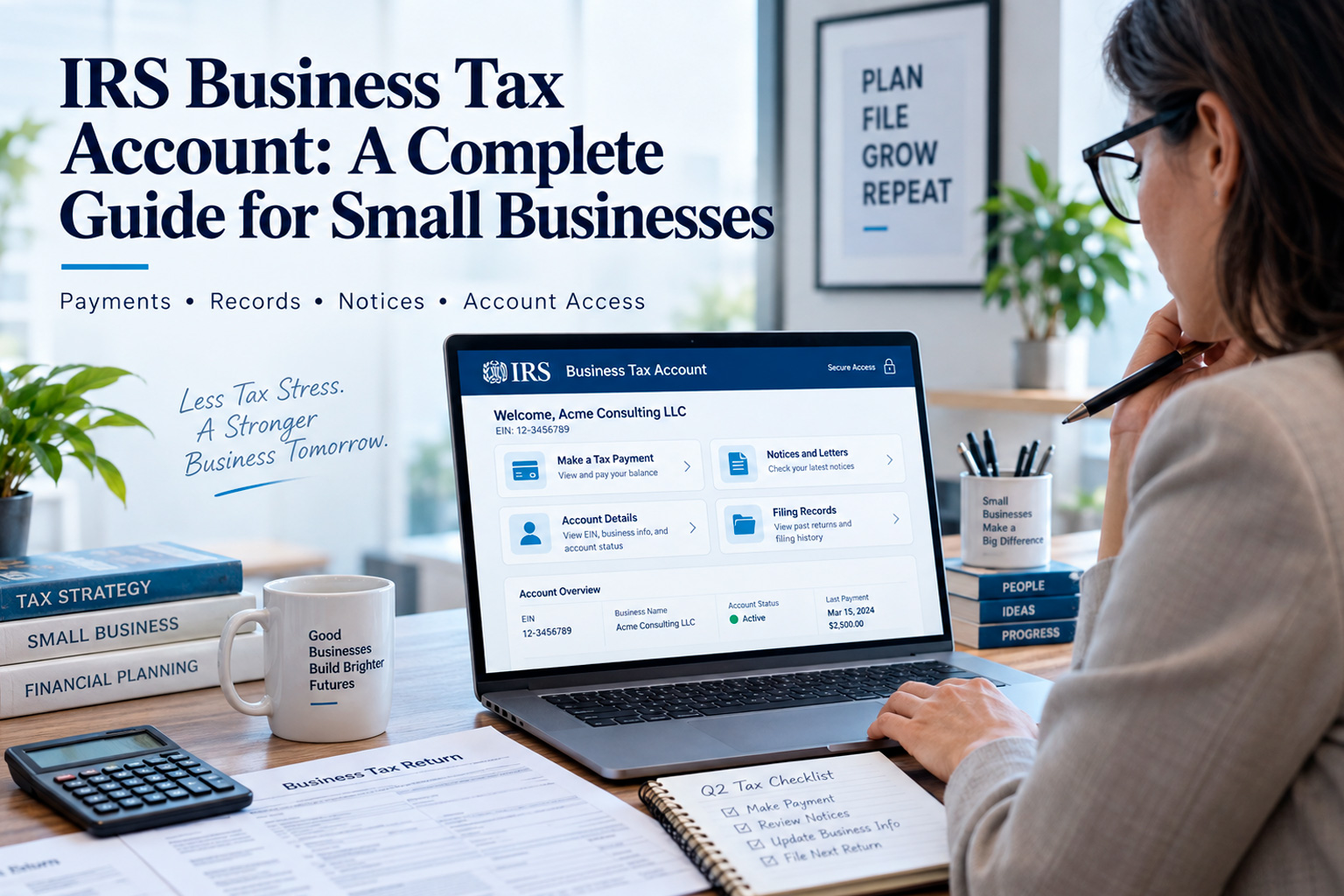
An IRS Business Tax Account is a secure, free online account that lets an authorized person at a business view and manage that business's federal tax information directly with the IRS. Think of it as the business version of the individual online account the IRS has offered for years, except it's built around entities instead of Social Security numbers.
Once you're logged in, you're looking at your business's actual IRS records, not a summary, not a third-party estimate. That includes balances owed, payment history, notices, and in many cases, tax transcripts, all pulled straight from IRS systems.
Who Can Actually Use a Business Tax Account Right Now
This is where a lot of business owners get confused, because the IRS has expanded eligibility more than once since launch, and older articles floating around online are already out of date. As of the summer 2026 update, the following can generally register for BTA access:
- Sole proprietors who have an EIN
- Individual partners in a partnership and individual shareholders in an S corporation, provided they have a Social Security number or ITIN
- S corporations and C corporations
- Partnerships
- Tax-exempt organizations
- Government entities and tribal governments
One important catch: LLCs that file as a Schedule C or Schedule F business, meaning single-member LLCs taxed as sole proprietors, still can't get their own designated BTA access as of this writing, though the IRS has said broader LLC access is coming. If your LLC falls into that gap right now, that's exactly the kind of detail worth checking with a tax professional before you assume you're covered.
S corp and C corp designated officials should also know there's a renewal window each year, roughly mid-June through late July, to keep that access active. Miss it, and you're stuck rebuilding your credentials at a worse time.
Getting Set Up: How to Access Your Account
Setting up access isn't complicated, but it does require some patience the first time through.
- Go to the official IRS Business Tax Account sign-in page.
- Select "create an account" and choose the business option.
- Verify your identity through ID.me, which typically means a photo ID and a selfie scan.
- Enter your business details, EIN, entity type, and your role at the business.
- Confirm your identity matches IRS records for that entity.
The identity verification step is usually where people get stuck, especially if the name on file with the IRS doesn't exactly match what's on your ID, or if your business address hasn't been updated in a while. If you hit a wall here, it's often faster to have a tax professional sort out the mismatch than to keep retrying the same login.
What You Can Actually Do Once You're In
This is where the summer 2026 expansion made a real difference. Depending on your entity type and role, a Business Tax Account now lets you:
- View your balance due and make payments straight from a bank account
- Schedule a payment up to a year in advance, or cancel one you already scheduled
- Store multiple bank accounts in a digital "wallet" so you're not re-entering routing numbers every time
- See recent payments, including EFTPS payments, wire transfers, checks, and money orders, and find out fast if one was returned or refused
- Request a tax compliance check
- View and download transcripts for payroll, income, and excise tax returns
- Read and download an expanding set of digital notices, including refund notices like CP081B and extension approvals like CP211A
- Download your CP575 EIN verification notice directly, which many banks will now accept in place of the older Letter 147C
- Submit payments toward an Offer in Compromise
- View your business name and address on file with the IRS
- Give account access to eligible employees, so you're not the only person who can log in during a busy season
That last point matters more than it sounds. Before BTA, giving an employee or bookkeeper visibility into your IRS account meant either sharing your own login or routing everything through a CPA. Now you can grant limited access to the right person on your team without handing over the keys to everything.
Why This Actually Matters for Your Business
It's easy to file this under "nice to have" and move on, but a Business Tax Account changes the day-to-day reality of dealing with the IRS in a few concrete ways.
First, it cuts down on the biggest source of small business tax stress: not knowing what you owe or why. A lot of owners find out about a balance due when a scary letter shows up, weeks after the fact. With BTA, you can check your balance whenever you want, the same way you'd check a bank account.
Second, it gives you a paper trail you actually control. If the IRS claims a payment was late or missing, you can pull your own payment history instead of waiting on hold to have someone read it to you.
Third, and this one surprises people, it can actually speed up financing and banking relationships. Being able to download an EIN verification notice on demand, instead of waiting weeks for a mailed letter, has saved more than one client of ours from missing a closing deadline.
Where Business Owners Tend to Get Tripped Up
We see the same handful of mistakes over and over:
- Assuming every entity qualifies. Single-member LLCs on Schedule C still don't have direct BTA access, and business owners sometimes waste an afternoon trying to register before realizing that.
- Letting designated official access lapse. S corp and C corp renewal windows are easy to miss if nobody's tracking them.
- Treating BTA as a substitute for tax strategy. The portal shows you what you owe and lets you pay it. It doesn't tell you whether your entity structure, estimated payments, or payroll setup are actually working in your favor.
- Ignoring digital notices. Because the notice library keeps expanding, some owners don't realize a notice has even arrived until it's already overdue.
None of these are complicated problems, but they're the kind of thing that's obvious in hindsight and expensive in the moment.
Frequently Asked Questions
What is an IRS Business Tax Account?
It's a free, secure online account that lets an authorized person view and manage a business's federal tax records directly through the IRS, including balances, payments, and transcripts.
Who can use the IRS Business Tax Account?
Sole proprietors with an EIN, individual partners and S corp shareholders, S corporations, C corporations, partnerships, tax-exempt organizations, and government or tribal entities can currently register. Single-member LLCs filing on Schedule C or Schedule F are not yet eligible.
How do I access my IRS Business Tax Account?
You register through the official IRS sign-in page, choose the business option, and verify your identity through ID.me using a government-issued ID and a selfie scan, then link your business's EIN and entity details.
What can I do with an IRS Business Tax Account?
You can view and pay balances, schedule payments in advance, store bank accounts, view payment history, download transcripts and digital notices, verify your EIN, submit Offer in Compromise payments, and grant access to eligible employees.
Can I make business tax payments through the IRS Business Tax Account?
Yes. You can pay a balance due directly from a bank account, schedule payments up to a year ahead, and cancel a scheduled payment if plans change.
Can I view my IRS business tax transcripts online?
Yes, eligible users can view and download transcripts for various payroll, income, and excise tax returns directly through the account.
Can an LLC use an IRS Business Tax Account?
It depends on how the LLC files. Multi-member LLCs and LLCs taxed as an S corp or C corp generally fall under those entity categories and may qualify. Single-member LLCs that file on Schedule C or Schedule F don't yet have direct access, though the IRS has indicated that's changing.
Let TaxProNext Handle the Details
The Business Tax Account is a genuinely useful tool, but knowing it exists is different from knowing how to use it well, or knowing what it's telling you once you're logged in. That's the part we spend most of our time on with clients: setting up access correctly the first time, keeping an eye on renewal windows so nothing lapses, reading notices the moment they land instead of weeks later, and using what's in your BTA to actually plan instead of just reacting.
If you'd rather have someone who does this every day handle your IRS account setup, monitor your notices, and make sure your business stays ahead of deadlines instead of behind them, that's exactly what TaxProNext is here for. Reach out to our team, and we'll get your Business Tax Account set up right and make sure you're actually using it to your advantage, not just leaving it open in a browser tab.